 Italy Digital Nomad Visa 2026: Requirements & Application Guide
Overview
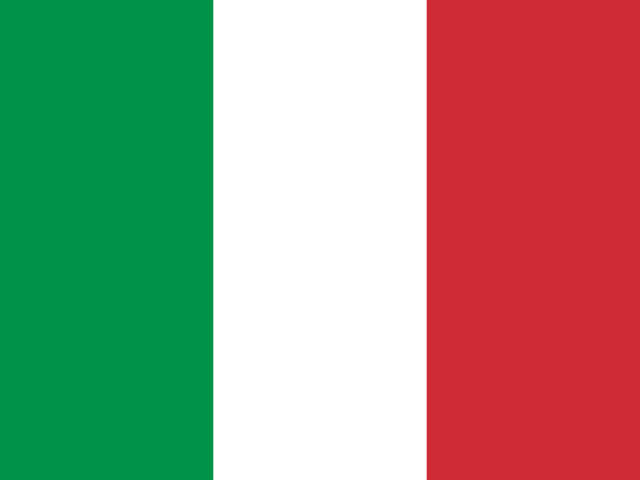
After years of anticipation, Italy launched its digital nomad visa in 2024, aimed at “highly skilled” non-EU remote workers and freelancers. It grants a residence permit valid for up to one year, renewable, and crucially does not require the employer-sponsored route that Italy's other work visas demand. For many, it's the most realistic path to living legally in Italy while working remotely.
Who qualifies
The visa targets highly skilled professionals — generally meaning you hold a relevant degree or have significant professional experience and qualifications in your field. You must work remotely, either as an employee of a non-Italian company or as a freelancer, and demonstrate experience (often at least six months) in remote work.
Income requirements
Italy sets the bar via a minimum annual income, commonly cited at roughly €24,800 per year (around €2,070 per month), though exact figures are tied to Italian thresholds and can vary by consulate. You'll also need proof of accommodation and comprehensive health insurance.
Documents needed
- Valid passport;
- Proof of qualifications or professional experience (highly skilled status);
- Remote work contract or proof of freelance clients outside Italy;
- Proof of income meeting the threshold;
- Comprehensive health insurance valid in Italy;
- Proof of accommodation;
- Clean criminal record;
- Tax compliance documentation.
How to apply
Apply at the Italian consulate responsible for your area of residence. After the visa is issued and you enter Italy, you must apply for the residence permit (permesso di soggiorno) within eight days of arrival and obtain a tax code (codice fiscale). Processing times vary and can be lengthy, so apply early.
Taxes
Spending more than 183 days in Italy generally makes you tax resident. Italy has offered favourable regimes for new residents in the past, though terms change, so confirm current rules. Our tax guide covers the general framework; an Italian tax adviser is recommended given the complexity.
Frequently asked questions
How much income do I need for the Italy digital nomad visa?
Commonly cited around €24,800 per year (about €2,070 per month), though figures are tied to Italian thresholds and can vary by consulate.
Who qualifies as highly skilled for Italy's visa?
Generally those with a relevant degree or significant professional qualifications and experience in their field, working remotely for non-Italian employers or clients.
How long is the Italy digital nomad visa valid?
Up to one year, and it is renewable provided you continue to meet the requirements.
When do I apply for the residence permit in Italy?
Within eight days of arriving in Italy you must apply for the permesso di soggiorno and obtain a codice fiscale (tax code).